
How to get rid of cockroaches (2026 Australian guide)
Species ID first, then the chemistry that fits. Why spray-and-forget fails on German cockroaches, the seven-step protocol that works, what doesn't, and when a licensed operator is the faster route.
Published 1 May 2026 · Reading time 9 minutes · By Dane Johns, WA Pest Management Technician Licence 13914
Step one: which cockroach do you actually have?
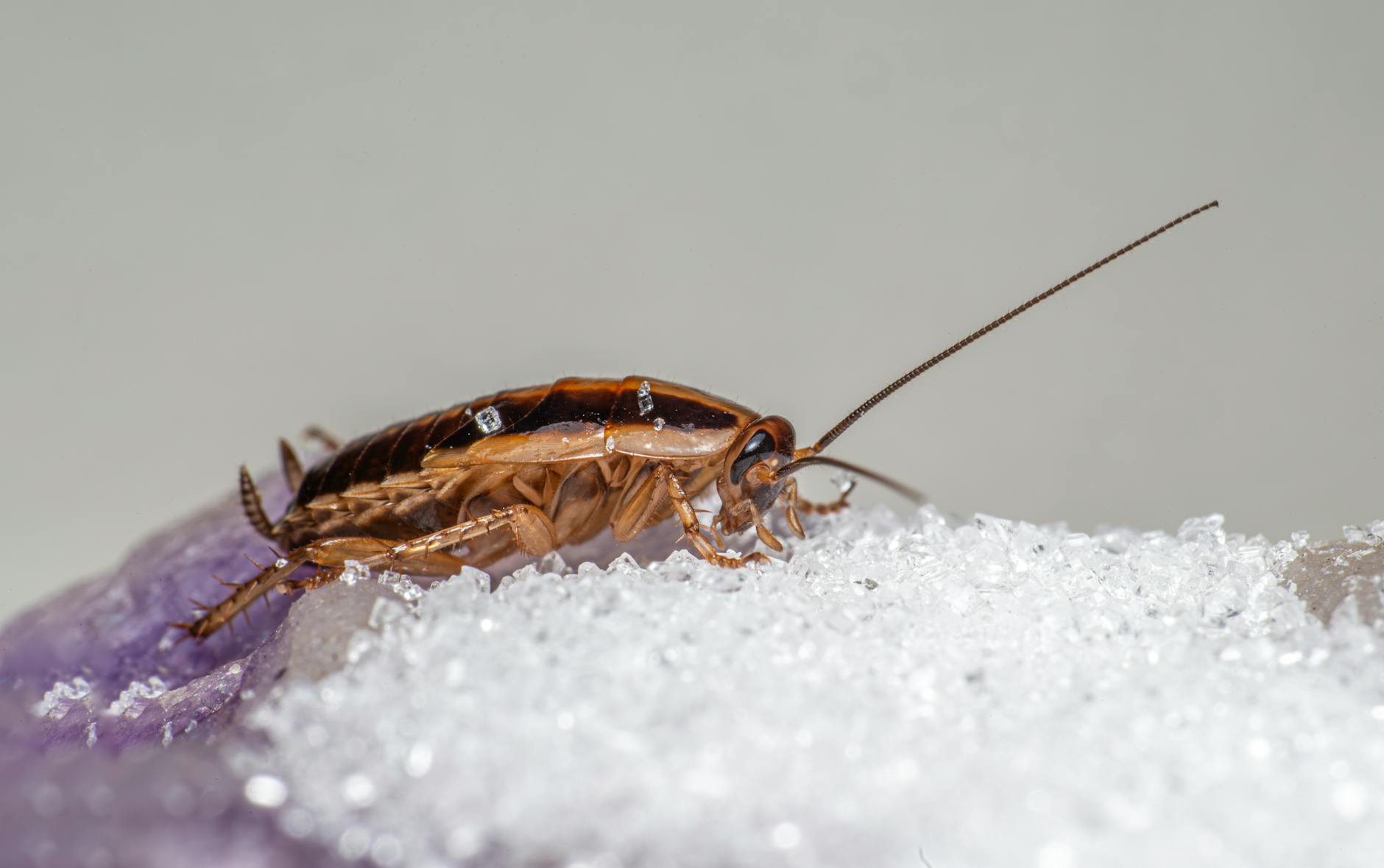
German cockroach (Blattella germanica)
Small (12–15 mm), tan to light brown with two dark stripes running down the back. Lives indoors in warm, humid voids: kitchens, bathrooms, behind fridges, inside microwaves, under dishwashers. This is the one you have to take seriously. They breed fast (one female produces 30–40 nymphs per egg case, 4–8 cases over a 200-day life), they hide in voids you can't reach, and they develop chemical resistance quickly. If you've sprayed and they keep coming back, this is probably your species.
American cockroach (Periplaneta americana)
Large (35–40 mm), reddish-brown, fast-moving, sometimes flies. Lives in drains, sub-floors, sewer systems and outside in mulch beds. They come up through the floor wastes at night looking for water and food. Less of a breeding-population problem than Germans; usually individual incursions from a sewer or sub-floor source. Treatment focus is the source, not the kitchen.
Australian cockroach (Periplaneta australasiae)
Similar size to American but with distinctive yellow markings on the wings and pronotum. Outdoor preferring: wood piles, garden mulch, garage corners. Less commonly an indoor breeding problem; usually they wander in and you spot one on the way to the kitchen. External harbourage clean-up plus a perimeter treatment solves this one.
If you don't ID the species first, you're throwing money at the wrong product.
Why "spray and forget" doesn't work.
Here's the problem with reaching for an aerosol: it kills a small fraction of your cockroach population, the adults that are out walking around when you spray. The rest are inside wall voids, behind appliances, inside hatching egg cases (oothecae), and in places aerosols don't reach. They breed back faster than the survivors die.
German cockroaches in particular have what entomologists call insecticide resistance. Sites that have been hit with the same active ingredient (typically pyrethroids: bifenthrin, permethrin) repeatedly often have populations that no longer respond to it. Modern professional treatment rotates active ingredients and combines them with insect growth regulators (IGRs), which prevent juveniles from maturing into reproductive adults. That breaks the cycle even if some adults survive. It is the basis of our German cockroach kitchen program.
What actually works (the 7-step protocol).
- ID the species. See above. Don't skip this.
- Place 3–5 sticky monitor traps in corners of the kitchen, behind the fridge, under the sink, in the pantry and bathroom. Leave them three days. The catch tells you where the harbourage zones are and roughly how many you're dealing with.
- Apply gel bait inside cabinetry voids and behind appliances. Gel bait (active ingredients such as hydramethylnon, fipronil, indoxacarb or imidacloprid) placed as 3–5 mm dots. Never on food-preparation surfaces. Replace every 2–4 weeks until traps are catching nothing.
- Add an IGR (insect growth regulator). Pyriproxyfen or hydroprene in liquid or aerosol, applied along wall-floor junctions of the kitchen and bathroom per the label. Keeps working 90-plus days.
- Fix the why. Repair leaking taps, store food in sealed containers, take out rubbish daily, vacuum behind appliances weekly. Cockroaches need food and water. Remove either and you cripple them.
- Seal entry points. Caulk gaps around plumbing, pipe penetrations, weep holes wider than 6 mm, gaps between cabinetry and wall. Pay particular attention to where the dishwasher hose enters cabinetry, sink waste pipes, and around the back of the fridge.
- Re-monitor at 14 days. Re-deploy the sticky traps. Catch should be down 80 per cent or more from baseline. If not, you've missed a harbourage zone; reset and find it (usually inside an appliance you didn't pull out).
What doesn't work (don't waste your money).
- Boric acid alone. It works on cockroaches that walk through it, but they groom obsessively and avoid heavy dustings. Useful as part of a multi-tool approach, useless on its own.
- Aerosol "kill on contact" sprays. See above: kills the few in the open, scatters the rest deeper into voids.
- Bay leaves, cucumber peel, peppermint oil. All popular on social media. None of them have any meaningful effect on a real infestation.
- Bug bombs and foggers. Push cockroaches into wall voids where they breed back. Considered actively counterproductive by most professional pest controllers.
- Ultrasonic repellers. No scientific evidence they work. Consumer tests have shown no effect on cockroach populations.
When DIY is fine, and when you need a pro.
DIY is fine when:
- You've spotted 1–3 cockroaches over a few weeks and sticky traps are catching fewer than five over three days.
- It's an American or Australian (large outdoor type); you mostly need to fix the entry point and treat the source.
- You're in a stand-alone house with no shared walls.
- You're catching them, but it's manageable and you're seeing decline.
Call a licensed pest controller when:
- You're seeing cockroaches during the day. Cockroaches are nocturnal; daytime sightings mean the population is large enough to spill out of harbourage.
- You're in an apartment or townhouse. German cockroaches travel between units through wall cavities, and uncoordinated treatment usually fails.
- You've treated multiple times yourself and they keep returning.
- You run a commercial kitchen, café or food premises; there are regulatory implications for an active infestation.
- You have very young children or immunocompromised family members. Cockroach allergens are documented asthma triggers.
A typical Perth German cockroach kitchen program with a licensed technician runs $250–$450 depending on severity, includes an IGR (which DIY products often don't) and a follow-up visit, and carries a six-month re-treatment period. See the pricing guide. That's not always cheaper than a determined DIY effort, but it's almost always faster and more reliable.
Common questions Perth homeowners ask.
Are cockroaches dangerous?
They don't bite. They are, however, mechanical vectors of Salmonella, E. coli and Staphylococcus. They walk through drains and refuse, then across food preparation surfaces. Their droppings and shed skins are documented asthma and allergy triggers, particularly in kids. The food safety implications are why commercial kitchens are under regulatory pressure to maintain ongoing pest programs.
Why do I see them in a "clean" house?
Cleanliness reduces opportunity, but a single dripping tap and a neighbour with an active population is enough. Don't beat yourself up; German cockroaches are a coordination problem more than a cleanliness problem.
Will one treatment fix it forever?
For most small-to-medium infestations, one professional treatment plus IGR plus your follow-up hygiene is enough to clear the active population for 6–12 months. For apartments or chronic-pressure properties (food premises, old plumbing), an ongoing quarterly program is realistic. Anyone promising "completely gone forever" from a single visit is selling, not treating.
What about gel baits around pets and kids?
Gels are applied at the label rate and placed inside cabinetry voids and behind appliances where pets and kids can't reach. People and pets stay out of treated areas until the re-entry period has passed. We brief on placements as part of any professional job.
Related
- Cockroach control Perth, the full service and what it costs
- Pest control prices in Perth, every service with a typical range
- What's my pest?, pick what you saw
- All guides
Rather have it done properly?
Tell us what you are seeing and where. Itemised price in writing, no call-out fee.
Prefer to talk? Call 0447 747 769
Or text photos of the pest or droppings to 0447 747 769 and we'll identify it.