
Cockroach control Perth.
Break the breeding cycle, not just the ones you see.
Saw one cockroach? There are more. We identify the species, place gel bait and an insect growth regulator where they breed, treat the drains if that is the source, and follow up. No spray on your benches.
- WA licence 13914
- Gel + IGR method
- Typical $250–$450
- Follow-up included on kitchen programs
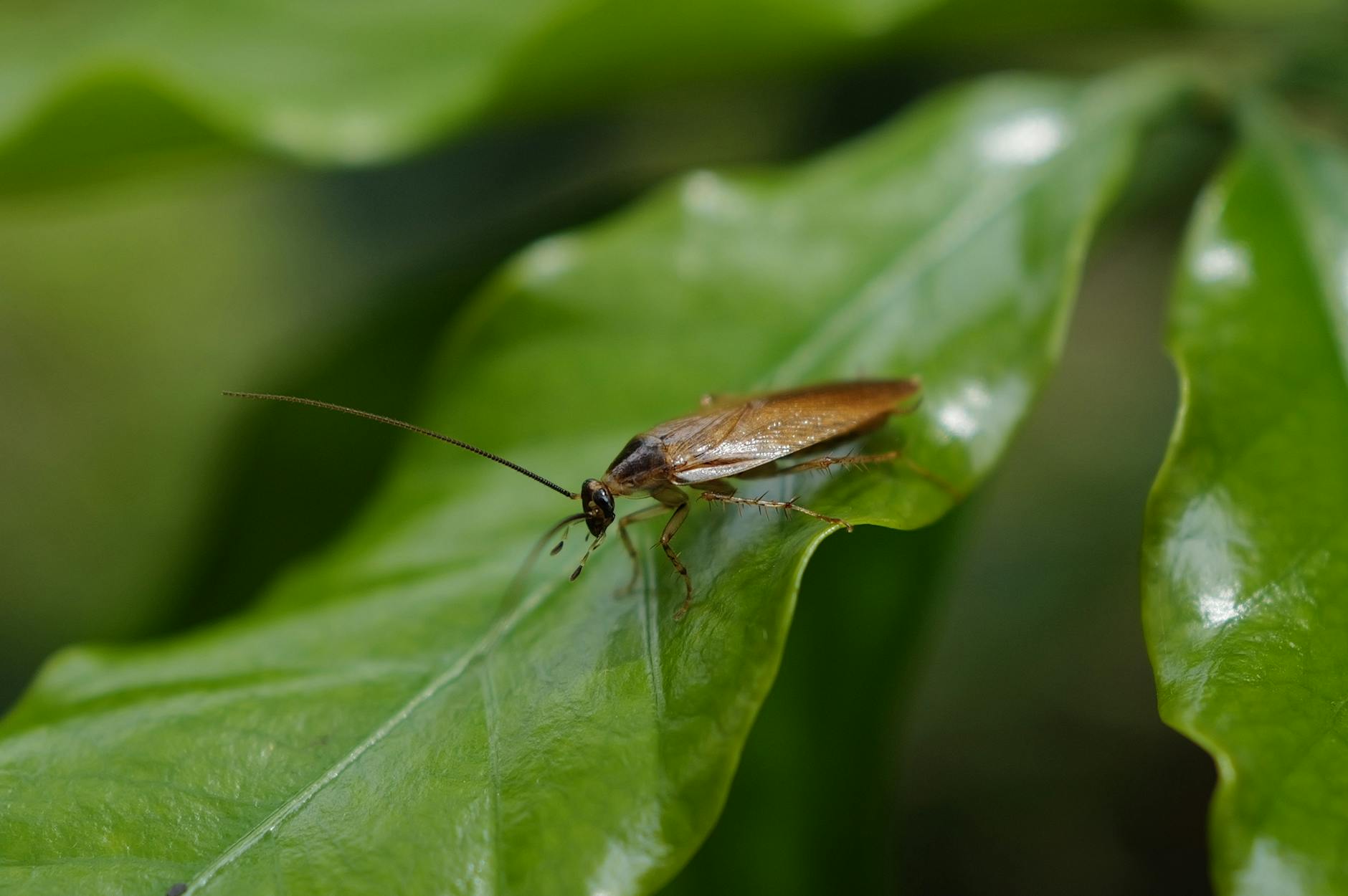
Three species, three different treatments.
Almost every cockroach call in Perth's northern suburbs is one of three species, and they do not respond to the same treatment.
- German cockroach (Blattella germanica): small, tan, two dark stripes. Lives in warm, humid voids near food and water: behind the fridge, under the dishwasher, in the pantry kickboards. One female produces dozens of offspring per egg case and carries several cases over her life. This is the indoor infestation species.
- American cockroach (Periplaneta americana): large, reddish-brown, flies clumsily into the kitchen late at night. Lives in drains, sewers, sub-floors and the gap behind the dishwasher where the drain pipe enters the wall.
- Australian cockroach (Periplaneta australasiae): similar size to the American with yellow wing edges. Breeds outdoors in mulch, compost, wood piles and under pavers, and wanders in through gaps under doors and weep holes.
Signs: droppings like coarse ground pepper inside cupboards, brown smear marks along the top of cupboard doors, a musty smell in the pantry, egg cases behind appliances, and adults seen in daylight, which means the harbourages are full. Perth's mild winters mean there is no seasonal die-off. Autumn is when they move indoors.
Gel, growth regulator, drains, then a follow-up.
Identify the species and the harbourages
German jobs are cabinetry gel and growth regulator. American jobs are drain treatment and penetrations. Australian jobs are external harbourage clean-up and a perimeter. We inspect with a torch and a flushing agent to find where they are living, then confirm the plan and price.
Gel bait and insect growth regulator
Gel placements go inside cabinetry voids, behind and under appliances and on hinge sides, away from food-contact surfaces. An insect growth regulator is applied to the voids so juveniles cannot mature into breeding adults. Indoors we use non-staining products only. Actives are rotated to avoid resistance.
Drains, perimeter and follow-up
Floor wastes, sub-floor cavities and external drain pits are treated for drain-breeding species and pipe penetrations sealed where we can. A residual goes on the external perimeter, not inside the kitchen. Kitchen programs include a scheduled follow-up to check placements and re-apply.
Typical ranges.
| Treatment | Typical range | Includes |
|---|---|---|
| German cockroach kitchen program | $250–$450 | Inspection, gel, growth regulator, targeted residual, follow-up visit, report, 6-month promise |
| Cockroaches within a general pest treatment | $250–$350 | Light activity; gel and growth regulator in the kitchen plus external perimeter |
| Drain treatment (American cockroach) | Quoted | Floor wastes, sub-floor, external pits, penetrations |
| Food premises program | Quoted | Scheduled visits with records suitable for a food safety audit |
Typical range, GST inclusive. Every job is quoted itemised in writing before we start. No call-out fee, no deposit, seven-day payment terms. See the full pricing guide.
What you get.
Treatment report
Species, harbourages found, every gel placement listed, products and rates, re-entry period, and the sanitation and sealing plan that keeps them out.
Treatment record
Kept three years under WA regulations. For food businesses, formatted for your audit file.
Six-month re-treatment promise
Cockroaches named on your invoice still active inside the treated areas within six months? We return at no charge.
Before we arrive.
- Do not spray or bomb the kitchen beforehand. Repellent aerosols scatter cockroaches away from the gel and hide the harbourages.
- Empty the cupboards under the sink and next to the stove. Pull the fridge and dishwasher out if you can do so safely; otherwise we will.
- Clear benches, put away food and pet bowls, and empty the bin.
- Fix or report dripping taps and leaking dishwasher hoses. Water is the reason they chose your kitchen.
- Tell us about anyone in the home with asthma or chemical sensitivity so we can adjust the plan.
- Kids and pets stay out of treated rooms until surfaces are dry and the re-entry period we advise has passed.
Related: General pest treatment · Pricing guide · Cockroach blog posts
Cockroach control FAQ.
What kind of cockroach do I have?
German cockroaches are small, 12 to 15 mm, tan with two dark stripes behind the head, and live indoors in kitchens, bathrooms and warm appliances. American cockroaches are large, 35 to 40 mm, reddish-brown and fast, and come up from drains, sewers and sub-floors. Australian cockroaches are a similar size with yellow edges on the wings and breed outdoors in mulch, wood piles and garden beds. Text us a photo and we will tell you.
Why does spraying on its own not work?
Spray kills the cockroaches that are out walking. The rest are inside wall voids, behind appliances and inside egg cases, and they breed back faster than the survivors die. Gel bait reaches the ones in the voids, and an insect growth regulator stops juveniles maturing into breeding adults. The spray is the smallest part of a proper treatment.
How long until they are gone?
German cockroach activity usually falls away over two to three weeks as the gel and growth regulator work through the population. Drain-based American and Australian jobs clear faster because we can treat the breeding site directly. Established German infestations get a scheduled follow-up visit, which is included in the kitchen program.
Are the baits placed near food?
Gel is placed inside cabinetry voids, behind and under appliances, on the hinge side of doors and in kickboard gaps, away from food-contact surfaces. We do not spray inside kitchen cupboards or on benches. You get a list of placements with your report.
Do you treat cockroaches in apartments and units?
Yes, with a caveat. German cockroaches move between units through shared walls and plumbing. If only your unit is treated, re-infestation from next door is likely. Strata-coordinated treatment is the best outcome; failing that we treat your unit thoroughly, seal the penetrations we can reach and set expectations honestly.
What does cockroach treatment cost in Perth?
A German cockroach kitchen program, including gel, growth regulator, a targeted residual and a follow-up visit, typically runs $250–$450. Light cockroach activity is covered within a general pest treatment at $250–$350.
Are cockroaches actually a health issue?
They do not bite, but they walk through drains and refuse, then across food-preparation surfaces, carrying bacteria with them, and their droppings and shed skins are a recognised asthma trigger. That is why food businesses run continuous cockroach programs and why we treat the breeding sites, not just the visible adults.
Get the cockroaches treated at the source.
Tell us where you are seeing them and when. A photo helps us identify the species before we arrive. Itemised price, no obligation.
Prefer to talk? Call 0447 747 769
Or text photos of the pest or droppings to 0447 747 769 and we'll identify it.